

Explore Offshore vs in-house teams and compare cost, control, talent...
How to Set Up an Offshore QA Center of Excellence in India: A Practical Guide for Global Teams
A US-based SaaS company with 180 engineers had been managing QA through a combination of in-house testers and project-by-project outsourcing to three different vendors. Release cycles were inconsistent. Test coverage varied dramatically by sprint. Regression suites were maintained by whoever had built them last, which sometimes meant they were not maintained at all. The VP of Engineering knew the problem was structural, not a matter of individual vendor quality. What the company needed was not another outsourcing contract. It needed an offshore QA center of excellence with consistent governance, accumulated test knowledge, and a team that treated quality engineering as a discipline rather than a task.
This guide is written for engineering and operations leaders who have reached the same conclusion. It covers what an offshore QA CoE actually is, how to build one in India, what it costs, which roles are needed, and how to manage it effectively once it is operational.
What is an offshore QA center of excellence?
An offshore QA center of excellence is a dedicated quality engineering unit established in an offshore location, most commonly India, that operates as a permanent, structured capability rather than a project-based testing service. It combines defined governance, accumulated testing knowledge, standardised tooling, and a stable team to deliver consistent quality across all products and releases, rather than addressing testing needs reactively through rotating vendor engagements.
What an Offshore QA Center of Excellence Is and What It Is Not
An offshore QA center of excellence is a permanent, structured quality engineering unit operating offshore with defined governance, stable team membership, standardised tooling, and accumulated institutional knowledge. It is not a vendor arrangement for project-based testing. It is not staff augmentation without oversight. It is a managed engineering function that happens to be located offshore.
The Definition That Matters for Buyers
The term “center of excellence” is used loosely in the industry. For the purposes of this guide and for any vendor evaluation you conduct, a genuine QA CoE has four structural characteristics that distinguish it from alternatives:
Permanence. The team exists as a continuous unit, not a collection of individuals assembled per engagement. This continuity allows the team to accumulate codebase knowledge, build reusable test assets, and evolve the automation framework over time.
Governance. There is a defined structure for who owns what, how quality decisions are made, how the CoE reports to the parent organization, and how performance is measured. Governance is what prevents an offshore QA team from drifting into task execution without strategic alignment.
Standardization. The CoE operates with a defined tooling stack, process framework, and documentation standard that applies across all products and projects it serves, rather than adapting its approach to whatever each project team prefers.
Institutional knowledge. Test suites, automation frameworks, defect analysis history, and quality metrics are owned by the CoE and maintained across team changes, not housed in individual engineers’ heads or siloed in project-specific repositories.
What It Is Not
An offshore QA CoE is not:
- A single QA vendor who tests one product for one sprint
- A loosely managed group of offshore testers with no defined governance
- A staff augmentation arrangement where QA engineers report to a local manager with no CoE structure
- An outsourced testing service where the vendor owns the process and the client receives a defect report
If you are currently using any of the above models and experiencing inconsistent quality or test coverage gaps, the signs your business needs a dedicated QA team are worth reviewing before scoping a CoE engagement.
How to Build an Offshore QA Center of Excellence in 6 Steps
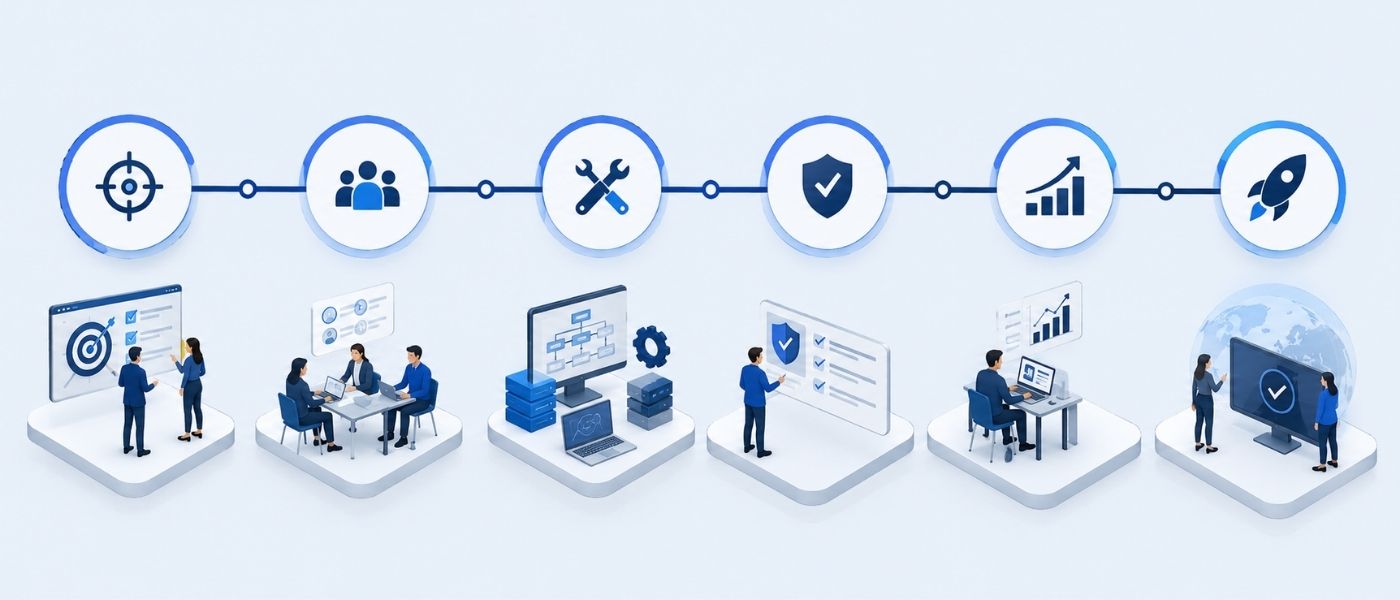
Building an offshore QA center of excellence in India typically takes 12 to 20 weeks from decision to operational go-live. The six steps below cover the decisions, activities, and sequencing that experienced CoE builders follow to reach productive operation faster and with fewer preventable delays.
- Define CoE scope and ownership model. Determine which products, platforms, or business units the CoE will serve. Decide whether the CoE will be fully dedicated to one product team or function as a shared quality service across multiple engineering teams. Assign a named CoE owner on the client side before any vendor engagement begins.
- Choose the operating model. Select between a captive model (own entity, full control), a managed CoE model (provider-operated under client governance), or a hybrid using a Build-Operate-Transfer structure. Each has different implications for timeline, cost, and long-term IP ownership of test assets.
- Select city and partner. India’s primary QA talent hubs are Bengaluru, Hyderabad, Pune, and Chennai. City selection should be driven by the specialisation mix required, not just cost. Automation engineering talent is deepest in Bengaluru and Hyderabad. BFSI and enterprise testing expertise is strongest in Chennai and Pune. Partner selection should be evaluated on governance maturity, not just technical capability.
- Build the governance framework before hiring begins. Define KPIs, reporting cadence, escalation paths, decision rights, and tooling standards before the first CoE hire joins. Governance retrofitted after problems surface costs significantly more than governance designed upfront.
- Hire in the right sequence. CoE Manager or QA Lead first, before other hires. This person participates in defining the CoE structure, not just executing it. Automation engineers second. Manual QA analysts third. Performance and security testers as the CoE matures.
- Run a structured onboarding and pilot phase. The first 30 to 60 days should be a defined onboarding phase with limited scope, focused on knowledge transfer, tooling setup, and process alignment. Expanding scope before this phase is complete is the most common cause of slow ramp to full productivity.
Why Global Companies Are Building Offshore QA CoEs in India
Global companies are building offshore QA CoEs in India primarily because India combines the world’s deepest pool of quality engineering talent with cost structures that make permanent CoE investment commercially viable at scales that would be impossible in the US, UK, or Australia. The strategic case extends beyond cost to talent depth, time zone coverage, and ecosystem maturity.
The Talent Depth Argument
India produces approximately 1.5 million engineering graduates annually, with a substantial and growing cohort specializing in software testing, test automation, performance engineering, and quality operations. According to NASSCOM, India’s IT sector employs over 5 million professionals, and quality engineering represents one of the fastest-growing specialisations within that workforce.
The talent available is not junior-heavy. India now has a significant mid-career QA cohort with 6 to 15 years of experience in enterprise testing frameworks, automation at scale, and quality governance, trained inside product companies and GCCs of companies including Microsoft, Amazon, JPMorgan, and Adobe.
The Cost Differential
The World Quality Report by Capgemini and Sogeti consistently identifies cost efficiency as the primary driver of offshore QA investment, with organizations reporting 40 to 60 percent savings compared to equivalent in-house or onshore testing capacity. At CoE scale, these savings compound annually as the team accumulates knowledge that reduces rework and defect escape rates.
Time Zone Coverage
For UK-based companies, India’s time zone (IST, 4.5 hours ahead of GMT) provides a morning-to-afternoon overlap that supports daily standups, sprint reviews, and escalation paths without either team working outside standard hours. For US and Australian companies, India enables follow-the-sun quality coverage when structured correctly, allowing testing cycles to continue overnight relative to the client’s working hours.
Government and Infrastructure Support
India’s SEZ and STPI frameworks, combined with state-level GCC incentive policies in Karnataka, Telangana, Maharashtra, and Tamil Nadu, provide infrastructure and tax advantages for companies establishing permanent offshore quality engineering facilities. These policy environments have contributed to India hosting over 1,700 GCCs as of 2024, many of which include dedicated QA or quality engineering functions.
Offshore QA CoE vs Traditional Outsourcing vs In-House QA
An offshore QA CoE delivers stronger knowledge retention, governance, and long-term cost efficiency than traditional outsourcing while costing significantly less than equivalent in-house QA in Western markets. The right model depends on the organisation’s scale, quality maturity, and appetite for managing an offshore function.
| Factor | Offshore QA CoE | Traditional Outsourcing | In-House QA |
|---|---|---|---|
| Monthly cost (10-person team) | $25,000 to $45,000 | $40,000 to $70,000 | $120,000 to $180,000 |
| Control over quality | High, client-governed | Low to moderate, vendor-governed | Full |
| Knowledge retention | High, accumulated by permanent team | Low, resets with each engagement | High |
| Scalability | Fast, structured scaling | Moderate, scope-change driven | Slow, hiring-dependent |
| Governance framework | Defined, client-owned | Vendor-defined, limited client input | Internal, fully owned |
| Time zone flexibility | Excellent for UK, US, AU coverage | Variable by vendor location | Limited to client time zone |
| Test asset ownership | Clear, client-owned from day one | Often contested or vendor-retained | Full |
| Ramp time for new products | Short, team has codebase context | Long, new vendor onboarding each time | Short, existing team |
| Best suited for | Scaling tech companies with ongoing quality needs | One-off or short-term testing requirements | Companies requiring maximum control at any cost |
Roles and Team Structure for an Offshore QA CoE
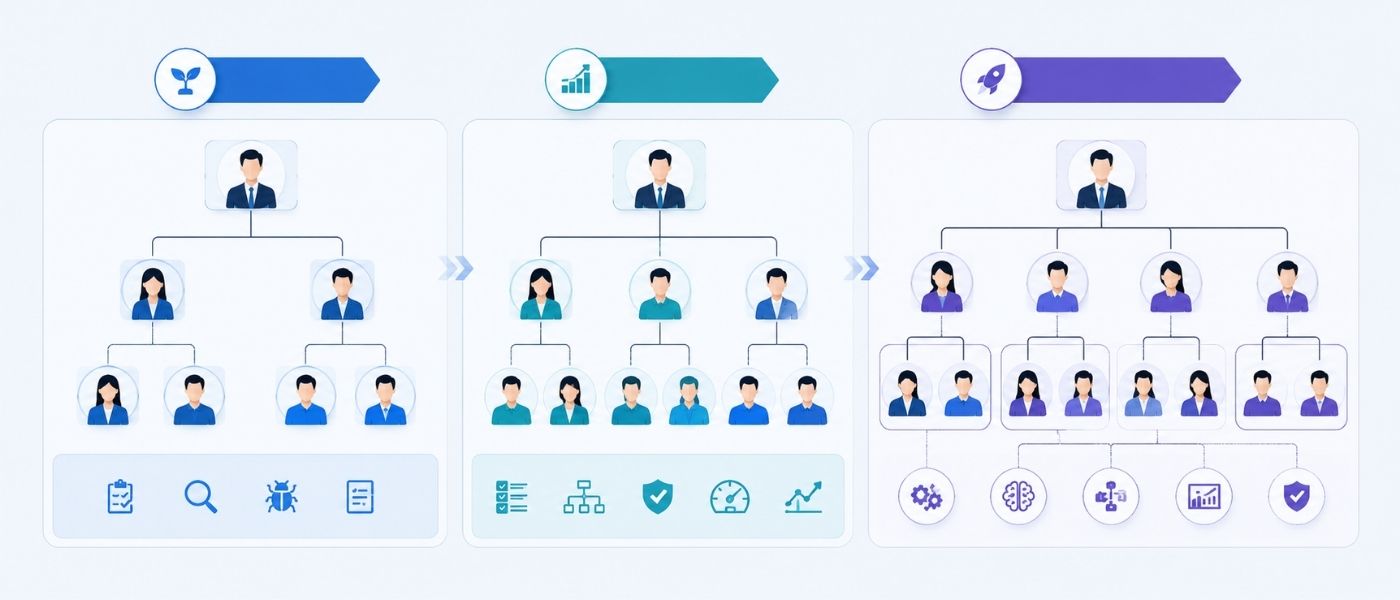
A functional offshore QA center of excellence requires a minimum of five distinct roles to operate effectively, with a CoE Manager providing governance and client alignment, supported by automation engineers, QA analysts, and specialist testers. The org structure should be defined before hiring begins, not assembled reactively as the team grows.
Core Roles at Each CoE Stage
Stage 1: Foundation (months 1 to 3)
- CoE Manager or QA Lead (1): Client-facing governance, sprint participation, KPI ownership, team management
- Senior Test Automation Engineer (1 to 2): Framework architecture, CI/CD integration, automation suite ownership
- QA Analyst (1 to 2): Manual testing, exploratory testing, test case authoring
Stage 2: Operational (months 4 to 9)
- QA Analyst additions (1 to 2): Expanding test coverage as the CoE takes on more products
- Performance Tester (1): Load testing, stress testing, baseline establishment
- DevOps QA Specialist (1): Pipeline integration, environment management, test infrastructure
Stage 3: Scale (month 10 onward)
- Security Tester (1): OWASP-based vulnerability assessment, penetration testing coordination
- Data QA Specialist (1): Data pipeline validation, analytics testing, data quality frameworks
- Junior Automation Engineers (2 to 3): Expanding the automation suite, maintaining regression coverage
Onshore vs Offshore Responsibilities
The most effective CoE models assign governance and strategic ownership to the client side, and execution, tooling management, and test asset development to the offshore team.
Client side (onshore):
- CoE sponsorship and budget ownership
- Product roadmap input and quality prioritisation
- Final escalation decisions on critical defects or release quality gates
Offshore CoE:
- Day-to-day test execution and automation development
- Sprint participation and QA ceremony facilitation
- KPI reporting and quality metric maintenance
- Test asset development and maintenance
If you are evaluating what a properly structured offshore QA function looks like before shortlisting partners, the guide on choosing the right dedicated QA partner covers the evaluation criteria that experienced QA leaders use when assessing provider governance maturity.
Governance, Tooling, and Process Frameworks
QA CoE governance defines who owns quality decisions, how the CoE reports to the parent organization, what KPIs are tracked, and how the CoE evolves its scope and capability over time. Without a defined governance model, offshore QA teams drift from strategic alignment into task execution, regardless of technical capability.
The Governance Model That Works
Working with global technology companies on CoE engagements, the governance frameworks that produce the best outcomes share three characteristics: clear ownership at every decision level, predictable reporting cadence, and explicit KPIs that connect CoE performance to product outcomes rather than activity metrics.
Ownership levels:
- Strategic: Client QA Director or VP Engineering owns CoE charter, budget, and scope
- Operational: Offshore CoE Manager owns daily delivery, team performance, and process compliance
- Technical: Senior Automation Engineer owns tooling, framework quality, and CI/CD integration
Reporting cadence:
- Daily: Async defect summary and test execution report via shared dashboard
- Weekly: Sprint quality review with client engineering lead (30 to 45 minutes)
- Monthly: CoE health review covering KPIs, coverage metrics, and capacity planning
- Quarterly: Strategic alignment review covering roadmap changes, tooling upgrades, and team scaling plans
Standard Tooling Stack
| Category | Recommended Tools |
|---|---|
| Test management | Jira with Zephyr or Xray, TestRail |
| Test automation | Selenium, Cypress, Playwright, Appium |
| CI/CD integration | Jenkins, GitHub Actions, GitLab CI |
| Performance testing | JMeter, Gatling, k6 |
| API testing | Postman, Rest Assured, Karate |
| Defect tracking | Jira, integrated with engineering workflow |
| Reporting and dashboards | Allure Reports, custom Confluence dashboards |
KPIs for an Offshore QA CoE
- Test coverage percentage by sprint and release
- Defect escape rate (defects reaching production per release)
- Automation coverage percentage (automated tests as a percentage of total test suite)
- Regression cycle time (time to complete full regression run)
- Mean time to report (average time from defect identification to reporting)
- Test execution efficiency (planned vs actual test cases executed per sprint)
Cost of Setting Up a QA CoE in India
Setting up an offshore QA center of excellence in India involves one-time setup costs of $10,000 to $40,000 and ongoing monthly operational costs of $15,000 to $50,000 depending on team size, seniority mix, and operating model. Compared to equivalent in-house QA in the US or UK, India-based CoE teams deliver 55 to 70 percent cost savings on a fully loaded basis.
Role-Level Cost Benchmark Table
| QA Role | India Monthly Rate (USD) | US/UK Equivalent Monthly Cost (USD) | Approximate Saving |
|---|---|---|---|
| QA Lead / CoE Manager | $3,500 to $5,500 | $14,000 to $20,000 | 70 to 75% |
| Senior Test Automation Engineer | $3,000 to $5,000 | $13,000 to $18,000 | 68 to 72% |
| QA Analyst (mid-level) | $1,800 to $3,000 | $8,000 to $12,000 | 65 to 70% |
| Performance Tester (senior) | $3,000 to $4,500 | $12,000 to $17,000 | 68 to 75% |
| DevOps QA Specialist | $2,800 to $4,500 | $12,000 to $18,000 | 65 to 72% |
| Security Tester | $3,500 to $5,500 | $14,000 to $22,000 | 68 to 75% |
One-Time Setup Costs to Plan For
- CoE scoping and governance design: $3,000 to $8,000 (if managed by a partner)
- Tooling licences (first year): $5,000 to $15,000 depending on stack
- Office infrastructure and workspace (if non-managed): $10,000 to $30,000
- Recruitment and onboarding: $5,000 to $12,000 for initial team
- Knowledge transfer and pilot phase: internal cost, typically 3 to 4 weeks of senior client engineer time
Hidden Costs to Budget For
The most consistently underestimated costs in CoE setup are not the headline team costs but the governance and management overhead that successful CoEs require:
- Client-side CoE sponsor time (typically 15 to 20 percent of one senior engineer or QA Director’s time in the first six months)
- Documentation development for knowledge transfer
- Tooling integration with existing CI/CD pipelines
- Communication infrastructure for distributed team operation
For a comprehensive breakdown of what quality engineering infrastructure looks like at the CoE level, the QA Center of Excellence complete guide covers the full capability model including tooling, governance, and team structure.
Managing an Offshore QA Team Effectively
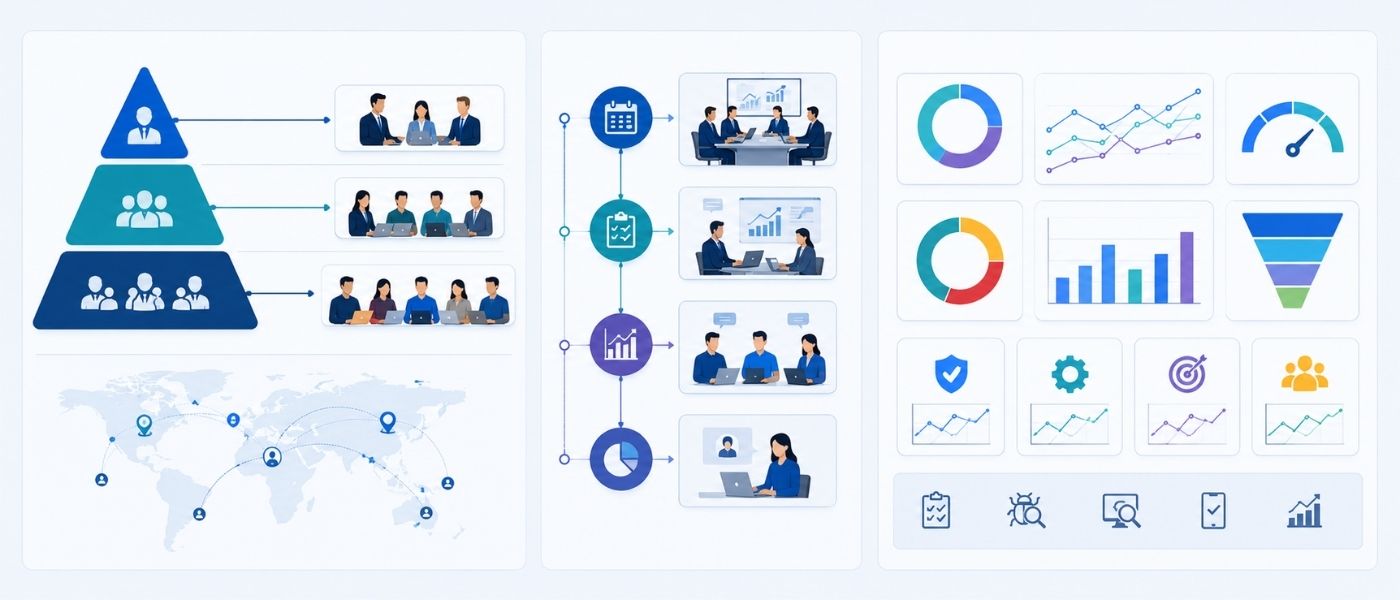
Managing an offshore QA team effectively requires structured communication across time zones, full integration of the offshore team into engineering sprint ceremonies, clearly defined KPIs visible to both sides, and deliberate investment in knowledge continuity as team composition evolves. The governance framework defines the structure; leadership practices determine whether it works.
Time Zone Management for US, UK, and Australian Teams
UK teams benefit from a natural overlap of 12:30 pm to 5:30 pm UK time with India’s working day. This window accommodates daily standups, defect triage calls, and sprint ceremonies without either team working outside standard hours. Most UK-India QA CoE engagements run daily standups at 1:30 pm UK time, which places them comfortably in the overlap zone.
US teams have a more limited overlap, typically 1 to 2 hours in late afternoon EST coinciding with late evening IST. The practical response is async-first communication for daily work, with the live overlap reserved for escalations and weekly sprint reviews. India-based QA teams can run overnight regression cycles that provide US teams with results ready at the start of their working day, which is one of the most practical applications of the time zone gap.
Australian teams run a follow-the-sun model naturally, with India’s early morning aligning with the Australian afternoon. This makes India-based QA particularly effective for Australian tech companies that need testing cycles to continue after their local teams end the working day.
Communication Cadences That Work
The most effective communication model for offshore QA CoEs combines async reporting for daily status with synchronous engagement for decisions, escalations, and sprint ceremonies.
Async daily: Automated test execution reports, defect summaries, and coverage dashboards shared on a defined schedule, not waiting for a call to communicate status.
Synchronous weekly: Sprint QA review with client engineering lead, covering defect trends, coverage gaps, upcoming regression scope, and any process adjustments.
Synchronous monthly: CoE health review covering KPIs against targets, capacity planning for the next sprint cycle, and any tooling or process improvements the offshore team has identified.
Maintaining Quality Standards Across Distributed Teams
The most common quality drift in offshore QA engagements happens when the offshore team starts optimising for test execution volume rather than defect prevention and coverage quality. Governance frameworks that tie CoE performance to defect escape rates and automation coverage percentages, rather than test case counts or execution speed, consistently produce better outcomes.
Common Mistakes and How to Avoid Them
The most common mistakes when building an offshore QA center of excellence are starting without a defined governance model, hiring before the tooling stack is decided, treating the CoE as a cost centre rather than a quality engineering function, and under-investing in the knowledge transfer phase.
Hiring before governance is defined. Teams assembled before the CoE governance model is established default to task execution without strategic alignment. The CoE Manager should be the first hire, contributing to governance design rather than inheriting it.
Tooling fragmentation. Allowing different products or engineering teams to dictate separate tooling to the CoE undermines the standardisation that makes a CoE valuable. Tooling decisions should be made at the CoE level and applied consistently.
Treating the offshore QA team as a vendor, not a team. CoEs where offshore engineers are excluded from sprint planning, architecture discussions, and product context calls consistently underperform those where the offshore team is treated as an extension of the engineering organisation.
Under-resourcing the pilot phase. The first 30 to 60 days of a CoE engagement require significant client-side investment in knowledge transfer. Companies that treat this phase as “the vendor’s problem to figure out” extend their ramp time by months.
Setting volume-based KPIs instead of quality-based KPIs. Measuring the CoE on test cases executed per sprint rather than defect escape rate and automation coverage drives the wrong behaviours quickly.
Offshore QA CoE Checklist for Global Teams
Before You Begin
- CoE scope defined: which products, platforms, and business units the CoE will serve
- Operating model selected: managed CoE, captive, or BOT
- Client-side CoE sponsor assigned with budget ownership
- Governance framework documented before first hire
- Tooling stack selected and licences provisioned
During Setup (Weeks 1 to 8)
- CoE Manager or QA Lead hired first and participating in governance design
- Automation engineers onboarded and framework architecture defined
- Pilot scope defined for first 30 to 60 days
- Reporting cadence and dashboard format agreed
- KPIs communicated explicitly to offshore team
Operational Readiness (Weeks 9 to 16)
- First regression suite completed and reviewed
- Automation coverage baseline established
- Defect escape rate tracked from first release cycle
- Weekly sprint review cadence running consistently
- Client feedback loop formalised
Ongoing Governance
- Monthly KPI review against targets
- Quarterly strategic alignment covering roadmap changes and team scaling
- Annual tooling review to keep automation stack current
- Succession planning for CoE Manager role documented
Conclusion
Building an offshore QA center of excellence in India is not a procurement decision. It is an engineering strategy decision, and it deserves the same rigour applied to any significant capability-building investment. The difference between a CoE that delivers compounding quality improvement and a loosely managed offshore testing arrangement is not the talent. It is the governance model, the operating structure, and the deliberateness of the setup process.
The organisations that build high-performing offshore QA CoEs share a common pattern: they define scope and governance before hiring, invest in knowledge transfer before expanding, treat their offshore QA team as an extension of the engineering organisation rather than a vendor, and measure performance against quality outcomes rather than activity metrics.
iValuePlus works with global technology companies to design and build offshore QA centers of excellence in India, from initial CoE scoping and governance design through team recruitment, tooling setup, and operational management. Whether you are structuring a CoE from scratch or restructuring an existing offshore testing arrangement, the team brings direct experience across the governance, talent, and operational decisions that determine whether a CoE reaches its potential.
If you are evaluating whether to build an offshore QA center of excellence or restructure an existing offshore testing arrangement, a structured conversation about your product scope, quality maturity, and team requirements takes 30 minutes and gives you a clear picture of what is realistic for your situation.
FAQ
How do I set up an offshore QA center of excellence in India?
Set up an offshore QA CoE by defining scope and governance before hiring, selecting city and partner based on specialisation requirements, hiring the CoE Manager first, establishing tooling standards, and running a structured 30 to 60 day pilot before expanding scope. The full setup typically takes 12 to 20 weeks from decision to operational go-live.
How long does it take to build a QA CoE in India?
Building an offshore QA CoE in India typically takes 12 to 20 weeks from initial decision to operational go-live. The timeline depends on operating model complexity, team size, and how thoroughly the governance framework and tooling stack are defined before hiring begins. Managed CoE models with experienced providers can compress this to 8 to 12 weeks.
What does a QA CoE in India cost?
A 5 to 10 person offshore QA CoE in India costs $15,000 to $50,000 per month in operational costs depending on team seniority and specialisation. One-time setup costs typically range from $10,000 to $40,000 covering governance design, tooling licences, and recruitment. This represents 55 to 70 percent savings compared to equivalent in-house QA in the US or UK.
What roles are needed in an offshore QA center of excellence?
A functional offshore QA CoE requires a CoE Manager or QA Lead, one to two Senior Test Automation Engineers, QA Analysts, and a Performance Tester at minimum. As the CoE matures, DevOps QA Specialists, Security Testers, and Data QA Specialists are added. The CoE Manager should always be hired first and should participate in governance design before other hires begin.
How do I manage an offshore QA team effectively?
Manage an offshore QA team effectively by establishing async-first communication for daily work, reserving the live overlap window for sprint ceremonies and escalations, defining KPIs based on quality outcomes rather than activity volume, and integrating the offshore team into engineering sprint ceremonies on the same basis as in-house staff.
What is the difference between a QA CoE and outsourcing?
A QA CoE is a permanent structured capability with defined governance, stable team membership, and accumulated institutional knowledge. Outsourcing is a project or task-based engagement where the vendor manages delivery independently with limited client governance. A CoE retains test knowledge and improves over time. Outsourcing resets with each engagement.
What are the benefits of an offshore QA center of excellence for US or UK companies?
US and UK companies benefit from 55 to 70 percent cost savings, access to deep QA automation and performance testing talent, time zone coverage for follow-the-sun testing cycles, accumulated test knowledge across releases, and a governance framework that improves quality consistently over time rather than varying by vendor engagement.
How do I choose the right offshore QA partner?
Choose an offshore QA partner based on their governance model maturity rather than their technical capability list alone. Ask how they structure CoE ownership, how they define and track KPIs, what their tooling recommendation process looks like, and whether they can provide references from clients running CoEs for more than 18 months. Verified security certifications and named account management are baseline requirements.
Recent Post
A Smart Guide to Scale Your Business Faster: BOT Model in India
Learn how the BOT Model in India helps businesses scale...
Hire Remote Offshore Developers in India: Cost, Process, and Best Practices
Hire remote offshore developers in India the smart way. Get...

iValuePlus Services
iValuePlus is a one-stop solution to address all your needs to access, build and grow your business in the Indian market which is cost-effective & has a huge talent pool. Established in 2019 as a ‘Business Solution provider', our team has delivered successful growth projects in the international market.
Our services include setting up ODC (offshore development center), Staff Augmentation, Talent Acquisition, Digital Marketing, in the IT/ITES domain.