

An effective offshore operating model connects financial control, people management...

Unlock Faster Software Delivery with End-to-End QA Transformation
In today’s hyper-competitive digital ecosystem, businesses are under constant pressure to deliver software faster while maintaining high quality. Customers expect seamless digital experiences, and even minor glitches can result in churn, negative reviews, and lost revenue.
However, achieving both speed and quality is easier said than done. Many organizations still rely on traditional testing processes that are slow, manual, and disconnected from development workflows. This creates delays, inefficiencies, and bottlenecks that directly impact software delivery timelines.
This is where QA transformation becomes a game-changer. By modernizing testing processes and integrating them into the development lifecycle, businesses can unlock faster software delivery without compromising quality.
End-to-end QA transformation ensures that quality is embedded at every stage—from planning to deployment—enabling organizations to move faster, smarter, and more efficiently.
What Is QA Transformation?
QA transformation refers to the process of evolving traditional testing methods into modern, automated, and continuous quality assurance practices.
It involves:
- Moving from manual to automated testing
- Integrating QA into DevOps pipelines
- Implementing continuous testing
- Leveraging AI and analytics
- Adopting a shift-left approach
The goal of QA transformation is to ensure that quality is not an afterthought but a continuous process throughout the software development lifecycle.
Businesses looking to implement structured transformation often rely on a comprehensive quality assurance framework that aligns testing with development goals
Why Traditional Testing Slows Down Software Delivery
Before understanding the benefits of QA transformation, it’s important to identify the limitations of traditional QA approaches.
- Manual Testing Bottlenecks
Manual testing is time-consuming and limits scalability.
- Late Testing Cycles
Testing often occurs at the end of development, leading to delays.
- Limited Test Coverage
Manual efforts cannot cover all possible scenarios.
- Poor Collaboration
QA teams often work in silos, disconnected from developers.
- Inefficient Feedback Loops
Issues are identified late, increasing the cost and time required for fixes.
These challenges make it difficult for businesses to achieve faster software delivery.
How End-to-End QA Transformation Accelerates Software Delivery
- Test Automation at Scale
Automation is the backbone of QA transformation. It enables:
- Faster execution of test cases
- Reduced human error
- Improved accuracy
Automated testing significantly reduces the time required for validation.
- Continuous Testing in CI/CD Pipelines
Continuous testing integrates QA into every stage of development.
Benefits include:
- Immediate feedback
- Faster issue resolution
- Seamless deployment
- Shift-Left Testing Approach
In QA transformation, testing begins early in the development process.
This approach:
- Identifies defects sooner
- Reduces rework
- Accelerates delivery timelines
- Real-Time Monitoring and Feedback
Continuous monitoring ensures that issues are detected and resolved quickly.
- AI-Driven Testing Optimization
AI enhances QA transformation by:
- Predicting potential defects
- Optimizing test cases
- Improving efficiency
Key Components of End-to-End QA Transformation
- Test Automation Frameworks
Robust frameworks enable scalable and efficient testing.
- Continuous Integration and Delivery (CI/CD)
Ensures seamless integration and deployment.
- Performance Testing
Validates application performance under various conditions.
- Security Testing
Protects applications from vulnerabilities.
- Analytics and Reporting
Provides insights for continuous improvement.
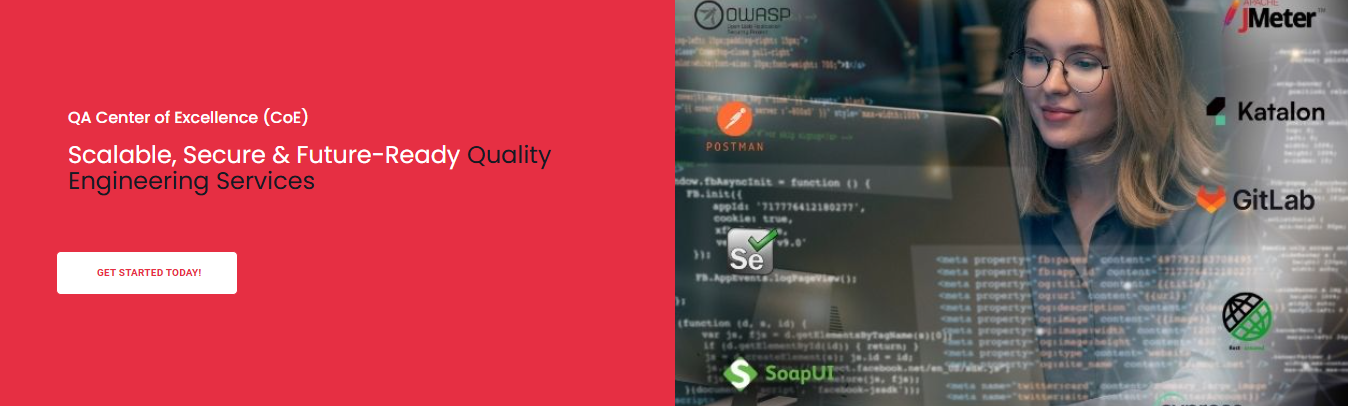
To standardize and scale these capabilities, many enterprises establish a QA Center of Excellence, ensuring consistency, governance, and efficiency across testing processes.
Benefits of QA Transformation for Faster Software Delivery
- Reduced Time-to-Market
Automation and streamlined processes accelerate releases.
- Improved Software Quality
Comprehensive testing ensures fewer defects.
- Enhanced Productivity
Teams can focus on innovation instead of repetitive tasks.
- Cost Efficiency
Early defect detection reduces costs.
- Better Customer Experience
High-quality applications improve user satisfaction.
QA Transformation in DevOps and Agile Environments
Modern software development relies heavily on agile and DevOps methodologies. QA transformation plays a critical role by:
- Integrating testing into agile sprints
- Supporting continuous delivery
- Enabling faster feedback loops
This alignment ensures that quality is maintained without slowing down development.
How iValuePlus Enables End-to-End QA Transformation
To successfully implement QA transformation, businesses need the right expertise and infrastructure. iValuePlus offers comprehensive solutions that help organizations modernize their QA processes and accelerate software delivery.
- Customized QA Strategies
iValuePlus designs tailored QA frameworks based on your business needs.
- Seamless DevOps Integration
Their solutions align QA with modern development practices.
- Automation-Driven Testing
Focus on improving efficiency through automation.
- End-to-End Implementation
From planning to execution, every stage is managed effectively.
- Continuous Monitoring and Optimization
Ongoing support ensures consistent performance.
Common Challenges in QA Transformation
While QA transformation offers numerous benefits, businesses may face challenges such as:
- Cultural Resistance
Teams may resist adopting new processes.
- Tool Integration Issues
Combining multiple tools can be complex.
- Skill Gaps
Lack of expertise can slow implementation.
- Initial Investment
Upfront costs may be required.
Partnering with experienced providers helps overcome these challenges.
Best Practices for Successful QA Transformation
- Define Clear Objectives
Set measurable goals for QA transformation.
- Invest in Automation Tools
Choose tools that align with your needs.
- Foster Collaboration
Encourage teamwork across departments.
- Focus on Continuous Improvement
Regularly refine testing strategies.
- Train Your Team
Equip your team with the necessary skills.
Future Trends in QA Transformation
- AI-Powered Testing
AI will enhance automation and predictive testing.
- Autonomous Testing
Self-learning systems that adapt to changes.
- Cloud-Based Testing
Scalable testing environments.
- DevSecOpsIntegration
Security integrated into QA processes.
- Hyper-Automation
Combining multiple technologies for maximum efficiency.
Why QA Transformation Is a Strategic Advantage
In a competitive landscape, businesses cannot afford delays or inefficiencies. QA transformation provides the tools and strategies needed to:
- Accelerate software delivery
- Improve quality
- Enhance efficiency
- Drive innovation
It is a critical investment for long-term success.
Conclusion
Faster software delivery is no longer a luxury—it’s a necessity. Businesses that fail to adapt risk falling behind in an increasingly competitive market.
End-to-end QA transformation enables organizations to eliminate bottlenecks, streamline processes, and deliver high-quality software at speed.
With the right partner like iValuePlus, businesses can seamlessly adopt modern QA practices and unlock new levels of efficiency and growth.
Now is the time to transform your QA processes—and accelerate your software delivery like never before.
Get in touch with our experts to explore how QA transformation can be tailored to your business needs and help you achieve faster, more reliable software delivery.
FAQs
- What is QA transformation?
QA transformation is the process of modernizing testing practices using automation and continuous testing.
- How does QA transformation improve software delivery?
It accelerates testing, reduces delays, and ensures faster releases.
- Is QA transformation suitable for all businesses?
Yes, it is scalable and adaptable to different industries.
- What tools are used in QA transformation?
Tools include Selenium, Jenkins, TestNG, and AI-based testing platforms.
- Why chooseiValuePlus?
iValuePlus offers tailored, scalable solutions that support end-to-end QA transformation.
Recent Post
Build or Buy AI: A Decision That Keeps Business Goals Ahead of Technology
Build or Buy AI: A Decision That Keeps Business Goals...
Why AI Automation Projects Get Stuck at the Pilot Stage – And What Businesses Should Do Next
Why AI Automation Projects Get Stuck at the Pilot Stage...

iValuePlus Services
iValuePlus is a one-stop solution to address all your needs to access, build and grow your business in the Indian market which is cost-effective & has a huge talent pool. Established in 2019 as a ‘Business Solution provider', our team has delivered successful growth projects in the international market.
Our services include setting up ODC (offshore development center), Staff Augmentation, Talent Acquisition, Digital Marketing, in the IT/ITES domain.