
An effective offshore operating model connects financial control, people management...
Categories


Choosing the Right Outsourcing Partner for Global Businesses in 2026
Why Outsourcing Is No Longer a Cost Decision Alone
For global businesses operating in an increasingly volatile, digital-first, and talent-constrained world, outsourcing has evolved far beyond a tactical cost-saving tool. Today, selecting the right outsourcing partner for global businesses is a strategic decision that directly impacts competitiveness, scalability, innovation velocity, compliance posture, and customer experience.
Enterprises expanding across regions face mounting challenges:
- Shortage of skilled talent in mature markets
- Rising operational and labor costs
- Increasing regulatory complexity
- Pressure to innovate faster while controlling risk
- Demand for 24/7 operations and global coverage
In this environment, outsourcing—when executed strategically—enables organizations to unlock global talent, accelerate execution, reduce risk, and build resilient operating models.
However, the benefits of outsourcing are not automatic. They depend heavily on choosing the right outsourcing partner—one that aligns with long-term business objectives, not just short-term cost goals.
This article provides a comprehensive framework for global enterprises to evaluate, select, and scale with the right outsourcing partner.
The Evolving Role of Outsourcing in Global Business Strategy
1.1 From Cost Arbitrage to Strategic Enablement
Historically, outsourcing was driven by labor arbitrage—moving work to lower-cost geographies. While cost efficiency remains important, modern global businesses now outsource to achieve:
- Faster go-to-market
- Access to specialized and emerging skills
- Business continuity and resilience
- Scalability without fixed overhead
- Operational flexibility across economic cycles
The outsourcing partner is no longer a vendor—it is an extension of the enterprise.
1.2 Why Global Businesses Are Rethinking Their Outsourcing Models
Several macro trends are reshaping outsourcing decisions:
- Remote and distributed work becoming permanent
- Digital transformation across all functions
- Increased scrutiny on data security and compliance
- Shift from project-based outsourcing to long-term partnerships
As a result, global businesses now look for outsourcing partners who can deliver end-to-end capabilities, not just execution.
2. What Defines an Outsourcing Partner for Global Businesses?
Not every service provider qualifies as a true outsourcing partner for global businesses. The difference lies in depth, alignment, and accountability.
A strategic outsourcing partner demonstrates:
- Deep understanding of global business operations
- Experience across multiple geographies and regulations
- Ability to scale teams and services rapidly
- Strong governance and transparency
- Long-term commitment to client success
2.1 Tactical Vendor vs Strategic Outsourcing Partner
Dimension | Tactical Vendor | Strategic Outsourcing Partner |
Engagement | Transactional | Long-term partnership |
Scope | Limited tasks | End-to-end functions |
Accountability | Output-based | Outcome-based |
Industry knowledge | Generic | Deep domain expertise |
Scalability | Reactive | Proactive |
Global businesses increasingly prefer partners who co-own outcomes, not just deliver tasks.
3. Core Services Global Businesses Commonly Outsource
A capable outsourcing partner for global businesses supports multiple functions across the enterprise.
3.1 Technology & IT Services
- Application development and maintenance
- Cloud infrastructure and DevOps
- Cybersecurity and compliance
- Data engineering and analytics
3.2 Business Operations & Back Office
- Finance and accounting
- Payroll and HR operations
- Procurement and vendor management
3.3 Digital & Customer-Facing Functions
- Digital marketing and performance marketing
- CRM and marketing automation
- Customer support and success
- Sales operations and enablement
3.4 Specialized and Emerging Capabilities
- AI and machine learning
- RPA and process automation
- Product engineering
- Compliance and regulatory operations
A strong outsourcing partner integrates these services into a cohesive delivery model rather than operating in silos.
4. Operating Models Used by Global Businesses
Global enterprises adopt different outsourcing operating models depending on maturity, risk appetite, and strategic goals.
4.1 Offshore Development/Delivery Centers (ODC)
ODCs are vendor-managed, dedicated teams focused on execution.
Best suited for:
- Speed
- Defined scope
- Short- to mid-term needs
Limitations include reduced control and limited long-term ownership.
4.2 Global Capability Centers (GCC)
GCCs are captive centers fully owned by the enterprise.
They support:
- Strategic functions
- IP creation
- Long-term innovation
GCCs require higher investment but deliver maximum control and alignment.
4.3 Build-Operate-Transfer (BOT)
BOT combines speed with ownership.
A partner builds and operates the center, then transfers it to the enterprise.
BOT is increasingly preferred by:
- First-time GCC builders
- Enterprises entering new markets
- Organizations seeking low-risk expansion
A mature outsourcing partner must be capable of supporting all three models.
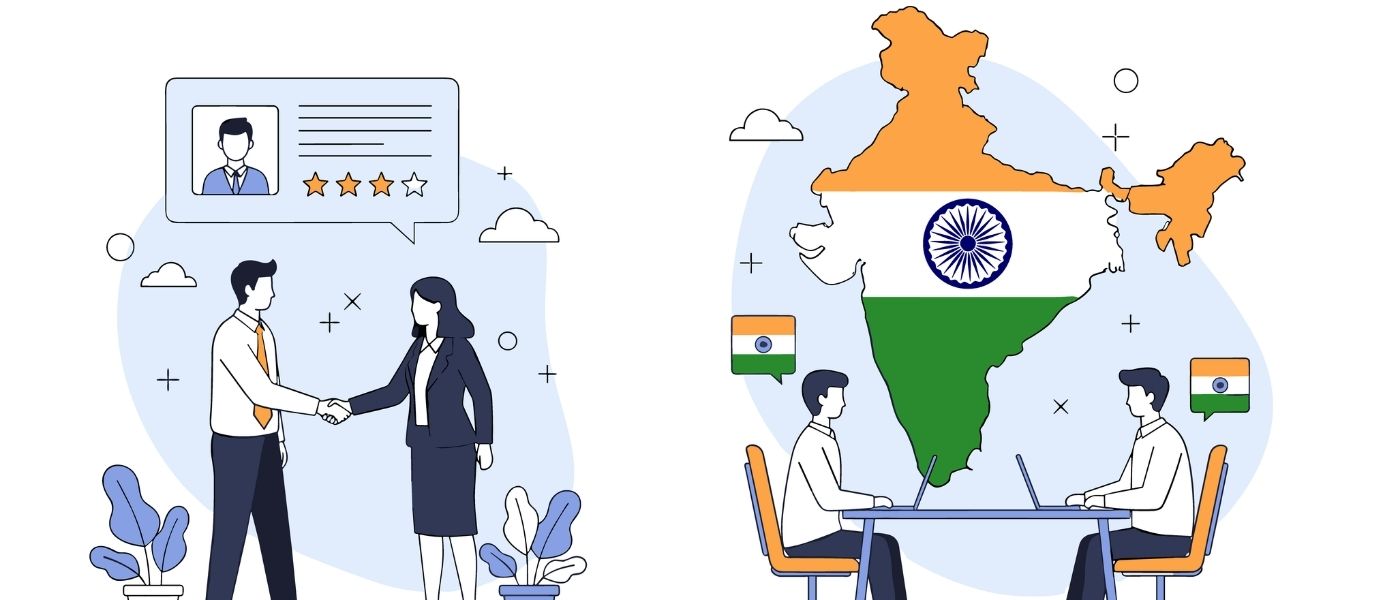
5. Why India Remains the Preferred Outsourcing Destination
India continues to be the top choice for global outsourcing due to:
- Large, skilled, and English-speaking talent pool
- Strong technology and engineering ecosystem
- Mature outsourcing and GCC infrastructure
- Cost efficiency at scale
- Proven compliance and governance frameworks
For global businesses, India offers not just cost advantages, but capability depth and scalability.
6. Key Criteria for Choosing the Right Outsourcing Partner
Selecting an outsourcing partner for global businesses requires a structured evaluation framework.
6.1 Strategic Alignment
- Does the partner understand your business goals?
- Can they support long-term growth, not just immediate needs?
6.2 Domain and Industry Expertise
- Experience in your industry vertical
- Understanding of regulatory and compliance requirements
6.3 Scalability and Talent Depth
- Ability to scale teams quickly
- Access to niche and emerging skills
6.4 Governance and Transparency
- Clear SLAs and KPIs
- Robust reporting and escalation mechanisms
6.5 Compliance and Risk Management
- Data protection and security standards
- Local labor law and tax compliance
7. Risk Areas in Global Outsourcing and How the Right Partner Mitigates Them
7.1 Operational Risk
Poorly managed outsourcing can lead to delays, quality issues, and communication gaps.
A strong partner mitigates this through:
- Process standardization
- Dedicated account governance
- Clear documentation
7.2 Compliance and Regulatory Risk
Global businesses face:
- Employment law risks
- Data privacy violations
- Tax and statutory non-compliance
An experienced outsourcing partner ensures:
- Local compliance expertise
- Regular audits
- Documentation and controls
7.3 Talent and Attrition Risk
High attrition can disrupt continuity.
Best-in-class partners focus on:
- Strong HR practices
- Career progression paths
- Cultural integration with client teams
8. Governance Models That Drive Successful Partnerships
Effective governance transforms outsourcing from a cost center into a value driver.
8.1 Joint Governance Structure
- Steering committees
- Operational review meetings
- Strategic roadmap alignment
8.2 Performance Measurement
Metrics should include:
- Business outcomes
- Productivity and efficiency
- Quality and customer impact
9. Technology Enablement in Outsourcing Partnerships
Modern outsourcing partners leverage technology to deliver superior outcomes:
- Automation for repetitive processes
- Analytics for performance optimization
- Collaboration platforms for distributed teams
- Security tools for data protection
Technology-enabled outsourcing delivers predictability, scalability, and insight.

10. Outsourcing as a Growth Accelerator for Global Businesses
When executed correctly, outsourcing enables:
- Faster market entry
- Reduced time-to-hire
- Lower cost-to-serve
- Improved customer experience
- Focus on core competencies
Leading global businesses treat outsourcing as a growth accelerator, not a support function.
11. Common Mistakes Global Businesses Make in Outsourcing
- Choosing partners based solely on cost
- Lack of clear scope and expectations
- Weak governance structures
- Treating outsourcing as transactional
Avoiding these mistakes requires strategic intent and partner selection discipline.
12. The Future of Outsourcing Partnerships
By 2026 and beyond:
- Outsourcing partners will act as co-innovators
- BOT and hybrid models will dominate
- Outcome-based pricing will increase
- AI-driven delivery will become standard
Global businesses that invest early in the right partnerships will gain sustained competitive advantage.
Conclusion
Choosing the right outsourcing partner for global businesses is one of the most critical decisions leaders will make in the next decade.
The right partner:
- Extends your capabilities
- Reduces operational risk
- Enables faster growth
- Strengthens global resilience
The wrong partner can slow execution, increase risk, and dilute brand value.
As outsourcing continues to evolve, global businesses must move beyond transactional thinking and build long-term, strategic partnerships that align with their vision for growth, innovation, and operational excellence.
Recent Post
Build or Buy AI: A Decision That Keeps Business Goals Ahead of Technology
Build or Buy AI: A Decision That Keeps Business Goals...
Why AI Automation Projects Get Stuck at the Pilot Stage – And What Businesses Should Do Next
Why AI Automation Projects Get Stuck at the Pilot Stage...

iValuePlus Services
iValuePlus is a one-stop solution to address all your needs to access, build and grow your business in the Indian market which is cost-effective & has a huge talent pool. Established in 2019 as a ‘Business Solution provider', our team has delivered successful growth projects in the international market.
Our services include setting up ODC (offshore development center), Staff Augmentation, Talent Acquisition, Digital Marketing, in the IT/ITES domain.